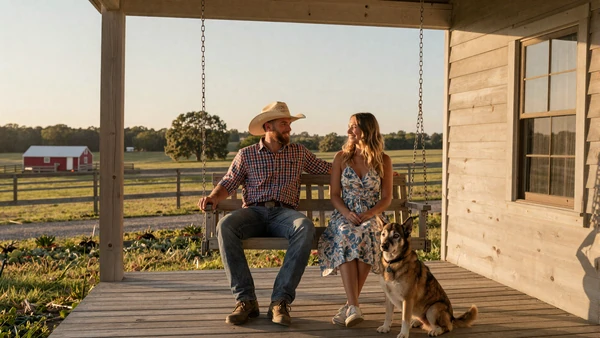
Every great farm starts with a great partnership. Farming couples do not just share a home - they share a business, a livelihood, and a daily rhythm that most people cannot imagine. According to USDA data, 96% of the 2 million farms in the United States are family-operated, which means the marriage and the enterprise are inseparable. The couples who thrive are the ones who treat both with equal intention. This guide breaks down exactly how they do it - from splitting chores to managing money, raising children, and keeping the spark alive when your office is also your kitchen table.
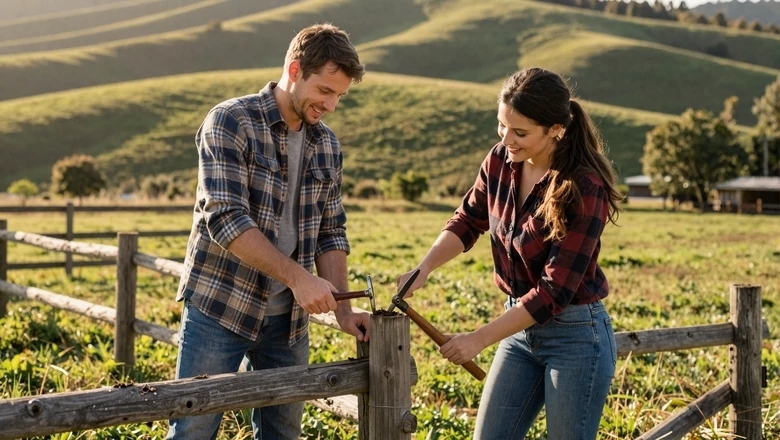
Dividing the Work Without Dividing the Marriage
The best farming partnerships are built on complementary strengths, not rigid gender roles. One partner may handle livestock and fieldwork while the other manages bookkeeping, supply orders, and marketing. What matters is that both roles carry equal weight - because they do. A 2025 USDA Census update shows that the share of U.S. farms with a female primary operator has grown from 5% in 1978 to over 14% today, reflecting a broader shift toward true partnership on the land.
The couples who get this right have one thing in common: they talk about the division openly rather than letting it default to assumptions. Sit down at the start of each season and ask two questions - "What am I best at?" and "What drains me?" - then assign accordingly. If one partner hates morning chores but is great with numbers, let them handle the financial side. If the other partner thrives at dawn but dreads spreadsheets, give them the early feeding rounds.
Here is the thing: resentment on a farm builds faster than anywhere else because you cannot walk away from the work. A corn crop does not care that you are frustrated with your spouse. When research shows that women with secure land rights invest more in soil conservation and crop diversity, it is a reminder that equal ownership - of decisions, not just deeds - strengthens the entire operation. Talk about roles before they become arguments.
"We stopped fighting about who does what the day we wrote it all down on a whiteboard in the barn. Now it is clear, and nobody feels like they got the short end." - Farming couple, central Iowa
When Your Office Is Also Your Home: Setting Boundaries
Living and working on the same piece of land means the line between "work time" and "us time" disappears unless you draw it deliberately. The most common complaint from farming couples is not the hard labor - it is the feeling that there is no escape from it. Your commute is a walk across the yard, and every meal happens within sight of the barn.
Successful farm couples protect their relationship with boundaries that feel almost counterintuitive in agriculture:
- Designate one evening per week as farm-free. No talk about equipment repairs, feed prices, or fencing. Drive into town for dinner if you have to - physically leaving the property resets the mental switch.
- Set a hard stop time on non-emergency days. After 7 PM, the tractor stays parked. The remaining daylight is for sitting on the porch, not re-checking the irrigation pump.
- Keep work conversations out of the bedroom. If you need to discuss herd health or fertilizer costs, do it in the kitchen or the office - not where you sleep.
- Take separate breaks. One partner reads a book while the other calls a friend. Individual time prevents the suffocation that comes from being together every waking hour.
Consider this: farm couples in Indiana and Kansas who participated in a Purdue Extension couples retreat reported a 40% decrease in conflict after implementing just two of the boundaries listed above. Small changes compound over seasons.